Prosumer AI
Run 32B–70B models. Serious local AI + great gaming.
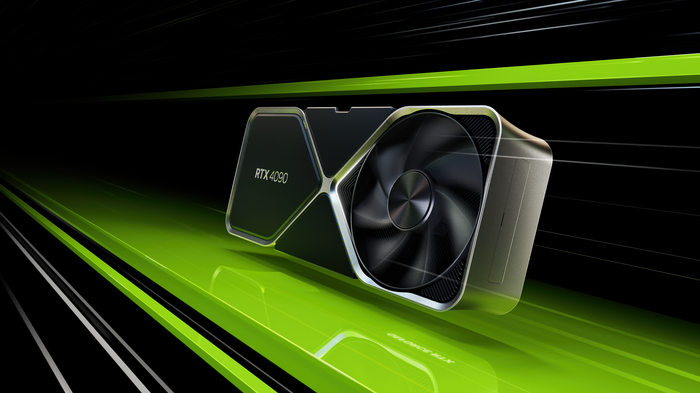
The Prosumer AI build is the one we recommend most often. The RTX 4090's 24GB of VRAM remains the professional sweet spot in 2026 — it runs 32B models at full quality and even handles Llama 70B with 4-bit quantization. Combined with 64GB of system RAM and a 12-core CPU, this machine handles everything from training small models to running complex inference pipelines to 4K gaming. It's the 'do everything' build.
Why This Build
- +24GB VRAM is the professional standard — runs 32B models at Q8, 70B at Q4
- +The RTX 4090 is still the best value for 24GB VRAM in 2026 (cheaper than the 5090's 32GB)
- +64GB DDR5 means models can overflow VRAM without killing performance
- +12 cores handle data preprocessing, model serving, and gaming simultaneously
- +360mm AIO keeps the CPU cool during sustained training workloads
Parts & Why We Chose Them
The RTX 4090 delivers 24GB VRAM at a lower price than the 5090's 32GB. For most users, 24GB is the right balance — it runs the models that matter without paying the 5090 premium.
The Ryzen 9 9900X gives 12 cores and 24 threads — enough for data preprocessing, model serving, and multitasking. The 120W TDP is efficient compared to Intel's 250W+ alternatives.
64GB is the sweet spot for a 24GB GPU. It's 2.7x your VRAM — plenty of overflow room for large models, datasets, and running multiple processes.
The Crucial T700 is a Gen5 NVMe with 12,400 MB/s reads. Loading a 40GB model takes seconds, not minutes. 2TB gives room for multiple models and datasets.
Fractal Design North — premium mid-tower with 355mm GPU clearance (the 4090 is 336mm, so it fits with 19mm to spare). Excellent airflow with a clean aesthetic.
Arctic Liquid Freezer III 360mm — the best-value 360mm AIO. Keeps the 9900X cool during sustained AI workloads where CPU preprocessing runs alongside GPU inference.
1000W is right for the 4090's 450W TDP plus transient spikes. Don't go lower — the 4090 can spike to 600W+ momentarily.
What You Can Run
Fast local chatbot for everyday questions, summarization, and simple coding tasks
Strong all-rounder — great for coding assistance, writing, and data analysis without needing a 70B model
Capable mid-size model — good balance of speed and intelligence for chat, code, and general tasks
Lightweight and fast — perfect for quick queries, text processing pipelines, and always-on local assistant
State-of-the-art image generation — photorealistic images, artistic styles, detailed compositions
Workhorse image generation — fast, well-supported, huge community of fine-tuned models and LoRAs
Latest Stable Diffusion architecture — better text rendering and composition than SDXL
High-quality text-to-video — generate 5-10 second video clips from text prompts, one of the best open-source video generators
Accessible video generation — create 6-second clips at 720p, good starting point for local video gen on mid-range GPUs
Smooth text-to-video — known for natural motion and good temporal consistency in generated clips
Lightweight video generation — the fastest and most accessible model, generates 5-second clips on 8GB+ GPUs
Image-to-video animation — takes a still image and generates a short animated video from it
High-quality text-to-video — competitive with commercial video generators, strong prompt following
Dedicated code completion and generation — supports 80+ programming languages
Best open-source coding model — handles complex refactoring, debugging, and full-file generation
Vision + language — analyze images, extract text from screenshots, describe charts and diagrams
Predict protein structures from amino acid sequences — the breakthrough that won the Nobel Prize, now runnable on your own hardware
Fast protein structure prediction from single sequences — no MSA needed, predictions in seconds instead of minutes
Protein language model for embeddings, function prediction, and variant effect analysis — the workhorse of computational biology
Single-cell RNA-seq foundation model — cell type annotation, perturbation prediction, and multi-batch integration without traditional pipelines
Design novel proteins through diffusion — generate binders, scaffold functional motifs, and create entirely new protein structures
Fine-tune your own custom 8B LLM — train on your data for domain-specific chat, coding, or analysis
Train custom SDXL LoRAs — add your own styles, characters, and concepts to image generation
Train FLUX LoRAs for state-of-the-art custom image generation — significantly better than SDXL
Trade-offs
- -The RTX 4090 draws 450W — your power bill will notice during long training runs
- -It's a large card (336mm) — make sure your desk setup can accommodate the case
- -70B models at Q4 work but aren't fast — expect ~10 tokens/sec, not the 30+ you'd get with a 5090
- -No GDDR7 — the 4090 uses GDDR6X, so memory bandwidth is lower than 50-series cards
Ideal For
- +Running 32B–70B parameter models locally
- +Stable Diffusion / FLUX at full quality
- +Fine-tuning small models (7B–14B)
- +AI development and research
- +4K gaming (the 4090 is still one of the fastest gaming cards)
- +Video editing and 3D rendering
Not Ideal For
- -Running 70B models at full FP16 (need 140GB VRAM)
- -Training large models from scratch (that's data center territory)
- -Users on a strict power budget
Detailed Compatibility
See full VRAM analysis, setup instructions, and performance estimates for each model.